

TEAM MEMBERS
Christian Kaylan Alviz
Zakiyah Farooque
Thao Nguyen
Meiying Piao
William Wang
TOOLS
Figma, Miro, Softr, Canva, Adobe Photoshop, Microsoft Excel
CLIENT
Kitsap Transit - a public transportation agency in Washington State that provides commuter services to connect communities across Kitsap County.
DURATION
January, 2026 - June, 2026
THE PROJECT SCOPE
Expanding the awareness of Lifeline program,
a federal social benefits program providing reduced phone and internet services for qualifying low-income households.
— SECONDARY RESEARCH
01. DISCOVERY
Firstly, to establish a general knowledge of our population of interest, we conducted some literature review.
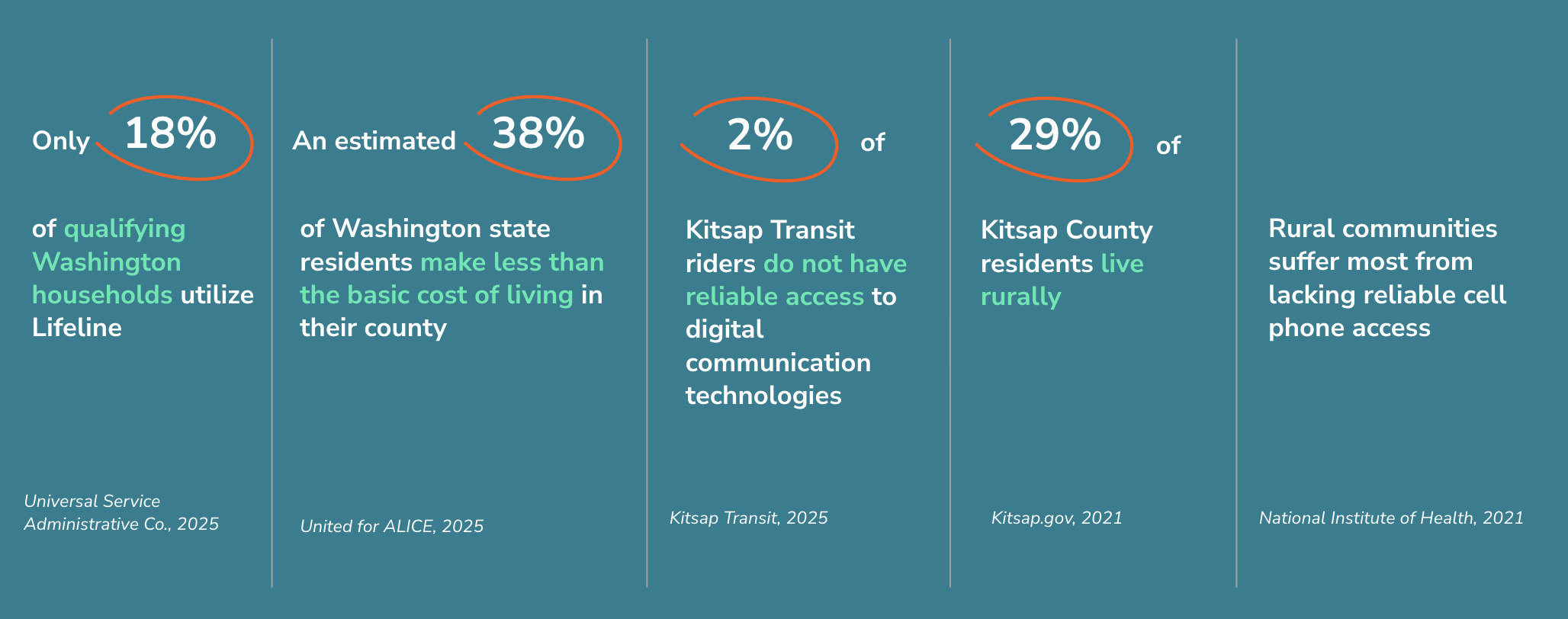
Over the course of 2 weeks, we conducted a literature review of 25+ articles and research papers. Our research explored topics on digital divide, mobile phone access, and participation in Lifeline program, with particular attention to populations who lack reliable connectivity or devices. Here are the key insights that we have found out.
— UNDERSTANDING THE STAKEHOLDERS
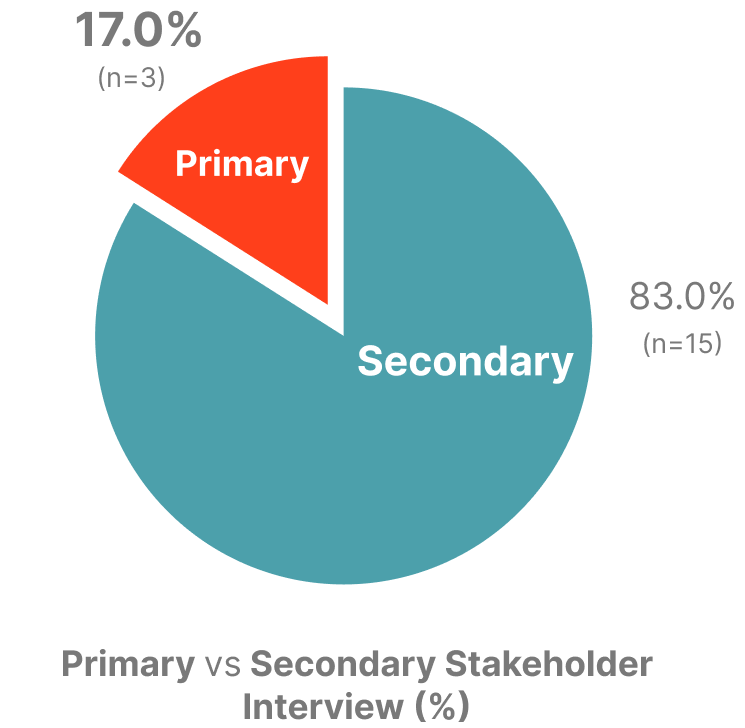
Having interviews with both primary and secondary stakeholders allows us to understand nuances of Kitsap County residents.
The process of making an interview list was difficult at first because we were unsure how to reach our primary stakeholders. We came up with many ideas, such as going to refugee camps or visiting bus stops in Kitsap County, hoping we might find someone without a phone. However, these ideas were pushed back due to concerns around safety and feasibility.
In the meantime, we also developed a list of secondary stakeholders we could contact, mainly nonprofit organizations, along with contacts provided by our client. Thankfully, after interviewing them, we were able to gain points of contact that allowed us to set up in-person, 1-on-1 meetings with individuals who do not have a mobile phone.
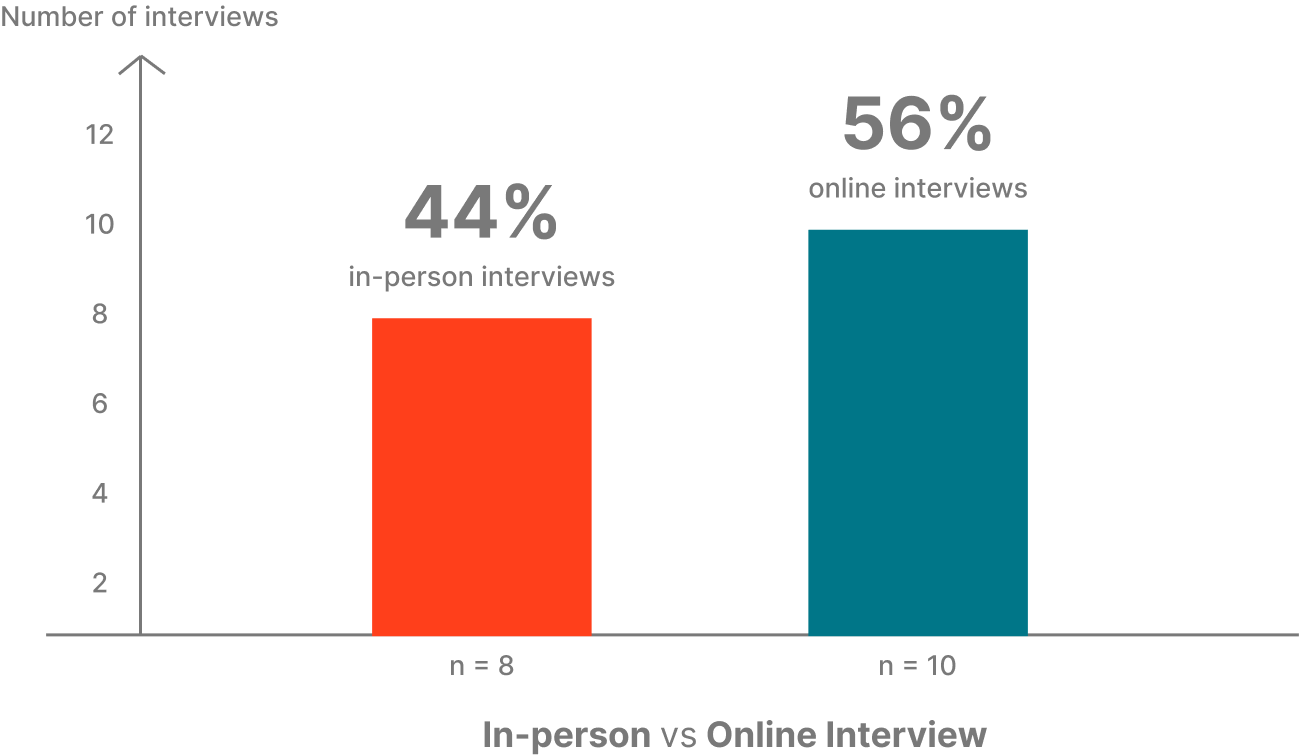
We had the privilege to come to Salvation Army Center in-person and have 8 meaningful interviews.
Anton Preisinger - Director of Northwest Hospitality. Their program conducts outreach to shelters and encampments to understand individuals’ challenges, including transportation, phone access, and food insecurity.

Real sharing from a secondary stakeholder
“People I assist with say that the Lifeline phones don’t come with enough data. Some of them can’t even rely on it in emergencies to call 911, so they just end up tossing it.”
— KEY INSIGHTS FROM THE INTERVIEW
02. SYNTHESIS
Leveraging AI to boost efficiency
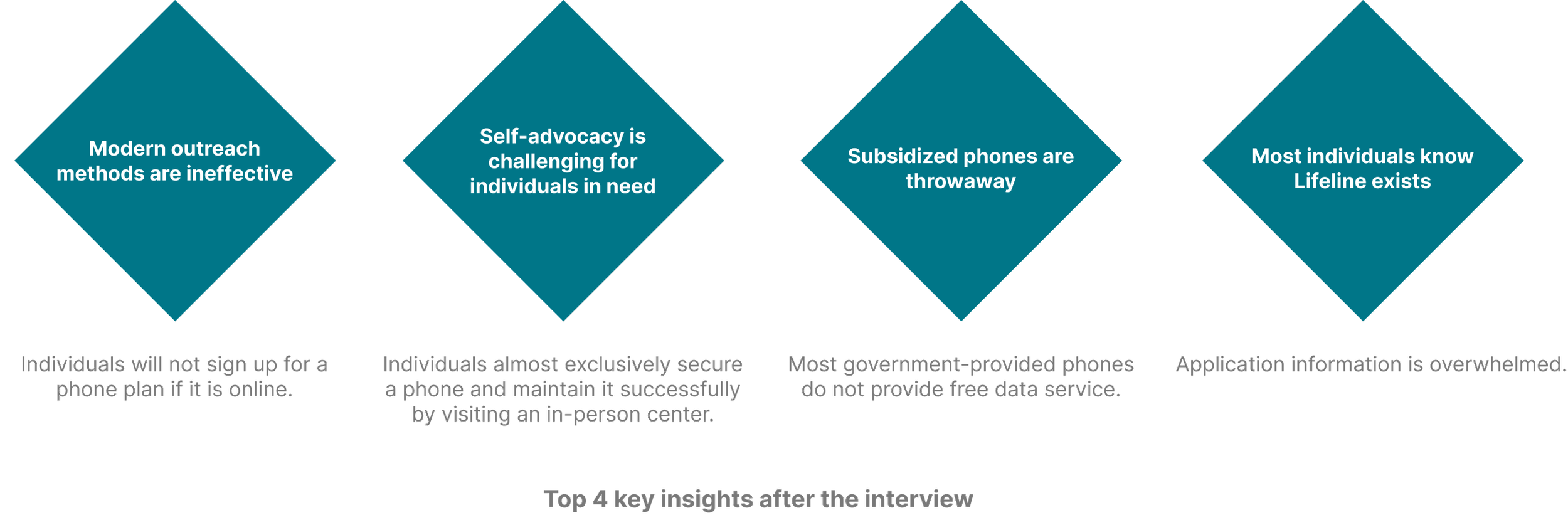
After having all our interview notes in hand, I used an AI tool called InsightSynth to help us pull everything together and identify the key patterns across interviews. Here are some key research insights:
— MAIN BARRIERS TO LIFELINE PROGRAM
Narrowing down to the main scope that we are trying to solve
Even though many of the interviewees have already been aware of the Lifeline program, they showed many concerns or difficulties that they encountered, preventing them from signing up or introducing others to this program.

Digital Literacy
Text-heavy qualification content creates a major barrier for many users, especially older adults and those for whom English is not their first language.
Lack of Awareness
Although many people have heard of Lifeline, they don’t fully understand its benefits or how to get started, so they prefer seeking help from someone they trust rather than reaching out to the program directly.


Trust
Many users doubt Lifeline’s legitimacy, feeling unsure about sharing their information and skeptical that the program truly offers a free phone without hidden costs.

Eligibility
Users often struggle to determine their eligibility and are unaware that enrollment in programs like SNAP or Medicaid can automatically qualify them for Lifeline.
03. DEFINE
— USER PERSONA
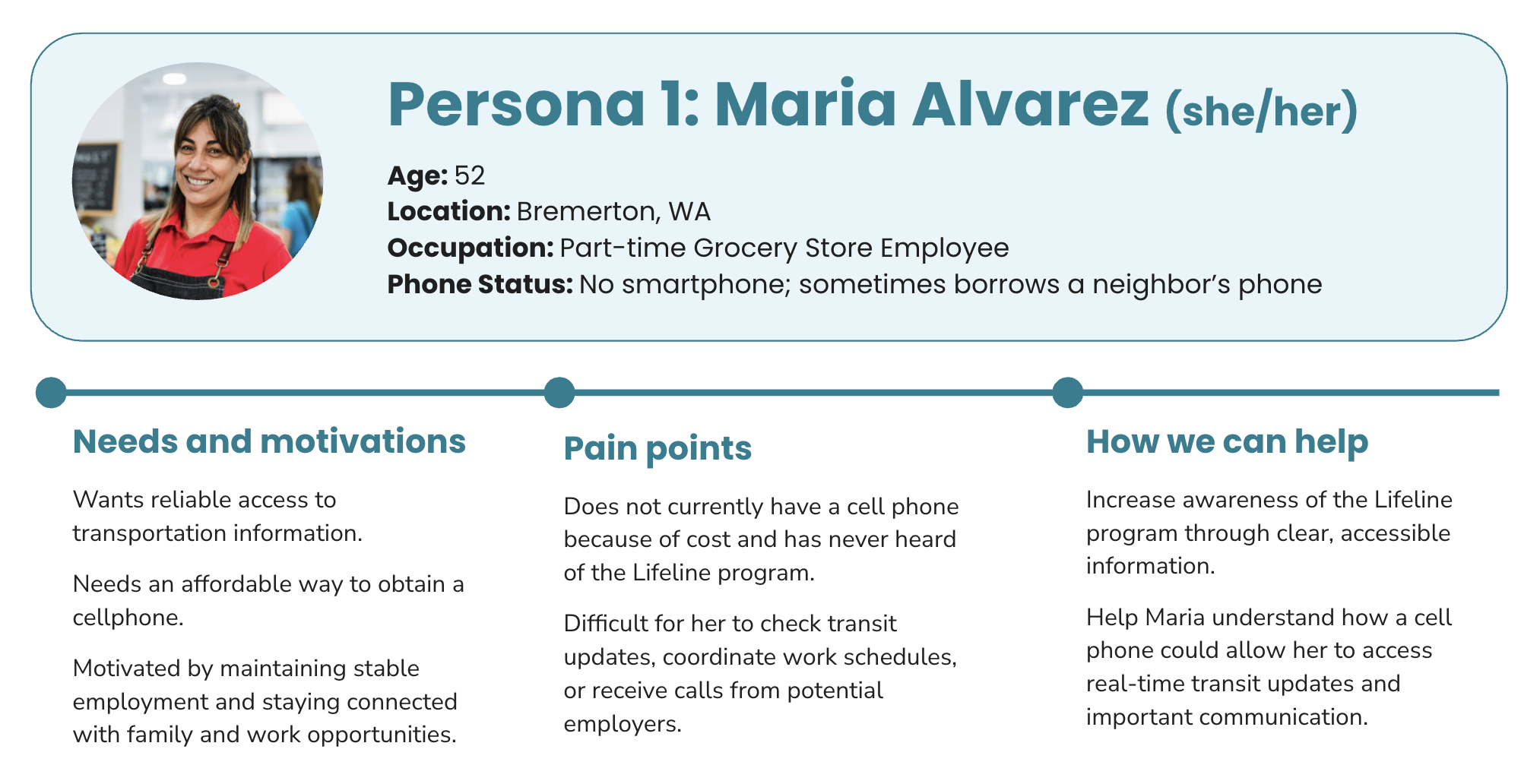
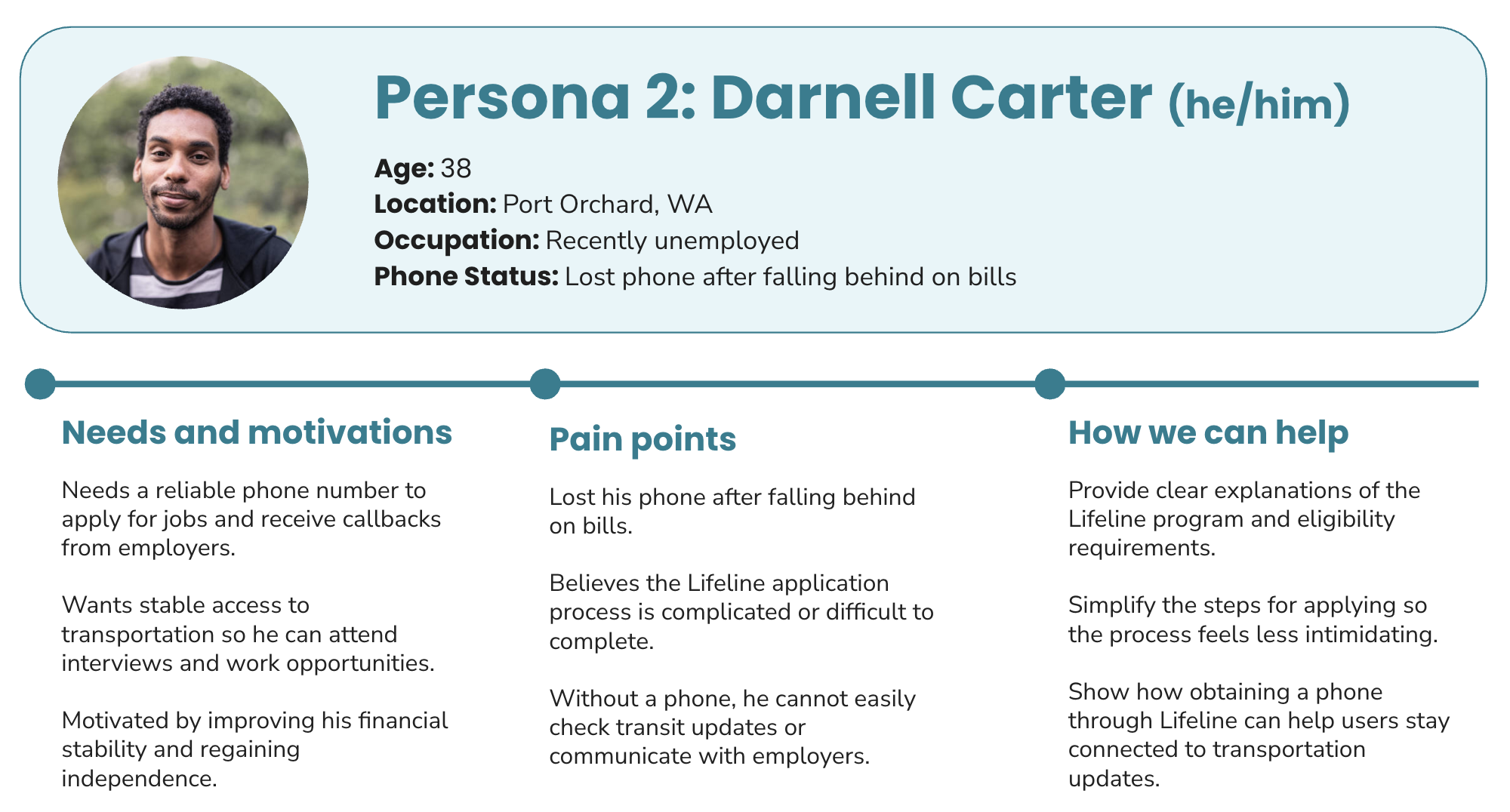
Leveraging insights from the interviews, I crafted 2 personas, representing my targeted audiences.
They are all middle-aged people. They share a same pain point which is not having a cell phone at the moment. As a result, their goal is to having a reliable mobile phone to either have a better access to transportation or applying for jobs.
— ETHICAL CONSIDERATIONS
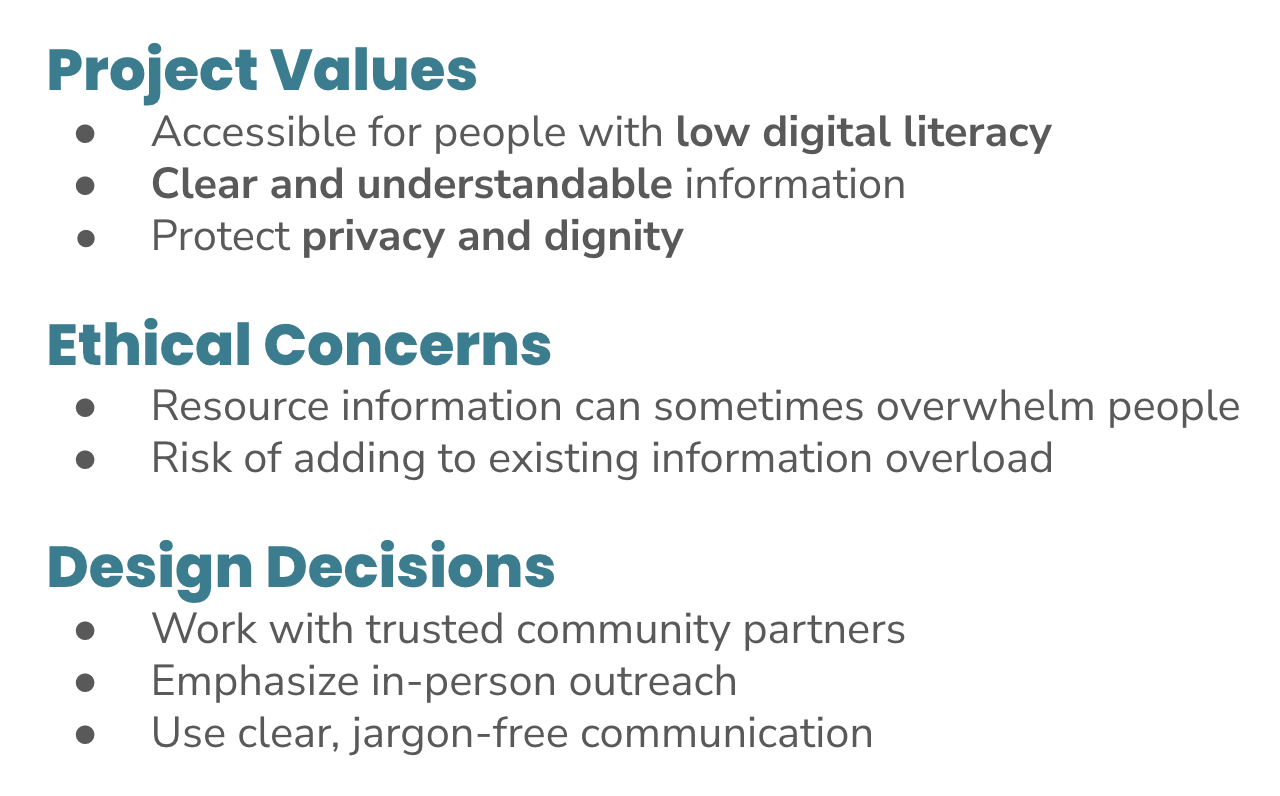
To guide our design, we defined key ethical considerations to ensure the solution is accessible, respectful, and trustworthy.
Our team wanted to make sure the information we provide is accessible, easy to understand, and respectful of people’s privacy and dignity. To address this, we focused on working with trusted community partners, prioritizing in-person outreach when possible, and using clear, jargon-free communication.

PROBLEM STATEMENT
Many Kitsap County residents who lack reliable access to mobile devices or internet services face limited awareness and utilization of programs like Lifeline, restricting their ability to access real-time transit information. This gap in digital communication access contributes to broader digital exclusion, making it harder for underserved populations to navigate transportation and essential services effectively.
HOW MIGHT WE
How might we design an accessible solution for non-technical audiences that helps them better understand, trust, and enroll in the Lifeline program?
— NEXT STEPS
04. SOLUTION
For this Spring quarter, we will have 9 weeks to come up with design solutions to help increase the awareness for the LifeLine program and then conduct usability testing to make sure those solutions are actually practical and effective.
The latest work will be published here. Stay tuned!
Stay tuned for our upcoming amazing work!